Carrito 0

Inicio > Qué hacemos > Área de Investigación científica > INDRE, Red Internacional de investigación en síndrome de Dravet y Epilepsia Refractaría
Investigadores de la red INDRE ApoyoDravet
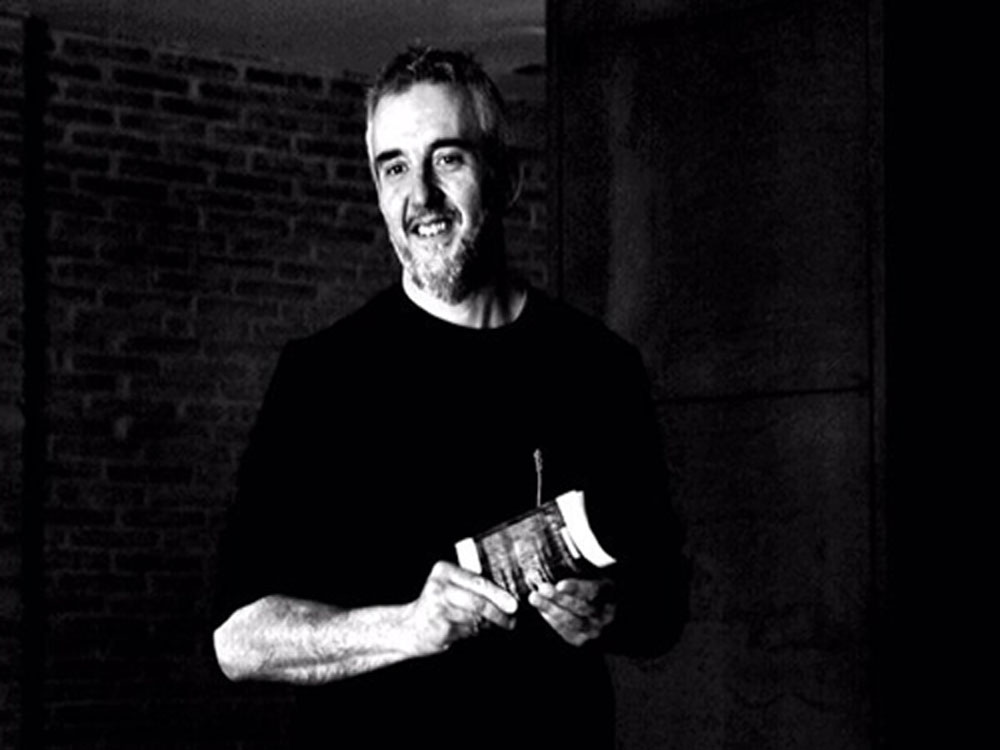
Dr. Juan Casto Rivadulla
Doctor en Neurociencia y Catedrático de Fisiología.
Catedrático de Fisiología en la Universidad de A Coruña.
Coordinador del grupo de Neurociencia y Control Motor (Centro Integral de Química y Biología e Instituto de Investigación Biomédica de A Coruña).
Descripción
El grupo Neurocom ha sido pionero en la utilización de las técnicas de Estimulación Cerebral No Invasiva, en modelos animales y en humanos.
Recientemente el interés de una parte del grupo se centra en la utilización de campos magnéticos estáticos en el tratamiento de la epilepsia. En nuestro último proyecto (CAMPOS MAGNÉTICOS ESTÁTICOS COMO TERAPIA INNOVADORA PARA LA EPILEPSIA REFRACTARIA Y EL SÍNDROME DE DRAVET; INVESTIGACIÓN EXPERIMENTAL, NUMÉRICA Y CLÍNICA, PI21/00151), financiado por el IS Carlos III, trasladamos nuestros resultados en modelos animales a pacientes de epilepsia focal fármaco-resistente, con una reducción significativa de las crisis en todos ellos. En este estudio, desarrollamos también un prototipo de casco de estimulación con el objetivo de aplicar esta tecnología a pacientes con epilepsia generalizada, como las crisis que se observan en personas con Síndrome de Dravet.
En este momento, el prototipo está siendo probado en sujetos sanos con el fin de caracterizar con precisión sus efectos sobre la actividad cerebral, antes de su utilización en pacientes. Para la realización de estos estudios colaboramos con diferentes grupos de investigación: grupo FENSI en el Hospital de Parapléjicos de Toledo, Laboratorio de Terapia Celular en Neuropatologías, en el CABIMER o el laboratorio del Siena Brain Investigation & Neuromodulation Lab en la Univ de Siena, entre otros. Además, colaboramos con diferentes servicios hospitalarios, como el servicio de Neurofisiología Clínica y Neurología del Hospital Universitario de A Coruña, y del Hospital. Gregorio Marañón de Madrid.
Description
The Neurocom group has been a pioneer in the use of Non-Invasive Brain Stimulation techniques in both animal models and humans.
Recently, part of the group has focused its interest on the use of static magnetic fields for the treatment of epilepsy. In our latest project (STATIC MAGNETIC FIELDS AS AN INNOVATIVE THERAPY FOR REFRACTORY EPILEPSY AND DRAVET SYNDROME: EXPERIMENTAL, NUMERICAL, AND CLINICAL RESEARCH, PI21/00151), funded by the Carlos III Health Institute, we translated our results from animal models to patients with drug-resistant focal epilepsy, achieving a significant reduction in seizures in all of them. In this study, we also developed a prototype stimulation helmet with the aim of applying this technology to patients with generalized epilepsy, such as the seizures observed in individuals with Dravet Syndrome.
At present, the prototype is being tested on healthy subjects to accurately characterize its effects on brain activity prior to its use in patients. To carry out these studies, we collaborate with various research groups, including the FENSI group at the National Hospital for Paraplegics in Toledo, the Laboratory of Cell Therapy in Neuropathologies at CABIMER, and the Siena Brain Investigation & Neuromodulation Lab at the University of Siena. Furthermore, we collaborate with various hospital departments, such as the Clinical Neurophysiology and Neurology departments at the University Hospital of A Coruña.